
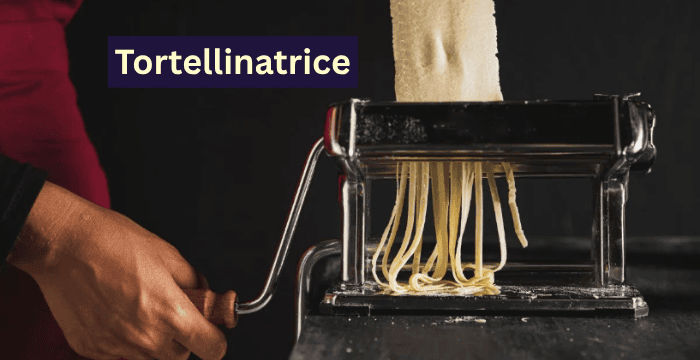
In the heart of Italian cuisine lies one of its most iconic dishes — tortellini. These tiny, ring-shaped pasta pieces, traditionally filled with meat, cheese, or vegetables, represent the art and passion of Italian culinary craftsmanship. But as the demand for authentic pasta continues to grow worldwide, the need for precision, speed, and consistency in production has given rise to the Tortellinatrice — a machine specifically designed to create perfect tortellini with both efficiency and traditional flair. Quotela Net
What Is a Tortellinatrice?
A Tortellinatrice is a specialized pasta-making machine created to automate the process of forming, filling, and sealing tortellini. It ensures that each piece is uniform in size, perfectly sealed, and filled with just the right amount of ingredients.
In simple terms, the Tortellinatrice is where Italian craftsmanship meets modern engineering. Instead of manually folding and sealing each piece — a process that can take hours — the machine allows pasta producers to maintain traditional quality while producing large quantities efficiently.
How the Tortellinatrice Works

The process of creating tortellini using a Tortellinatrice involves several coordinated steps that mirror the traditional hand-made method.
- Dough Preparation
Fresh pasta dough is prepared using high-quality semolina flour and eggs. This dough is then rolled into thin sheets that the machine can handle smoothly. - Filling Injection
The prepared filling — whether it’s cheese, spinach, meat, or ricotta — is placed into a hopper. The machine then automatically injects precise portions into the center of the dough pieces. - Folding and Shaping
The Tortellinatrice folds each piece of dough over the filling, sealing it tightly to prevent leakage during cooking. It then shapes the pasta into its signature ring or “belly-button” form, just like hand-made tortellini. - Cutting and Output
The finished tortellini are neatly cut and separated before being sent down a conveyor for packaging or drying. The result is thousands of perfectly shaped tortellini per hour — identical in taste and appearance.
Why the Tortellinatrice Matters in Modern Pasta Production
Italian pasta production has evolved significantly, but maintaining authenticity remains essential. The Tortellinatrice bridges this gap by combining tradition with technology.
- Consistency: Each tortellino is identical in size, shape, and filling quantity.
- Efficiency: Large batches can be made in a fraction of the time it would take by hand.
- Quality Preservation: Despite being automated, the machine mimics the gentle folding and sealing that preserve the pasta’s texture.
- Reduced Labor: It minimizes manual effort without compromising the craftsmanship of traditional Italian pasta.
- Scalability: From small artisanal producers to large industrial kitchens, the machine can be adjusted for different production volumes.
For restaurants and manufacturers, the Tortellinatrice has become an essential investment, allowing them to keep up with growing demand while maintaining the excellence Italian food is known for.
Traditional Art Meets Technology
Tortellini is not just food — it’s a cultural symbol of Italy’s Emilia-Romagna region, particularly Bologna and Modena. In the past, expert pasta makers would spend hours crafting each piece by hand. The Tortellinatrice doesn’t replace their artistry; instead, it amplifies it.
By automating repetitive tasks, chefs can focus more on developing new fillings, experimenting with flavors, or ensuring high-quality ingredients. The machine ensures every batch matches the handmade standard, preserving the authenticity of Italian culinary heritage in a modern world.
Different Types of Tortellinatrice Machines
Depending on production scale and requirements, there are several variations of the Tortellinatrice:
- Manual Tortellinatrice – Suitable for small restaurants or home chefs who want partial automation while retaining control.
- Semi-Automatic Models – Commonly used by medium-sized businesses where human supervision complements mechanical precision.
- Fully Automatic Industrial Machines – Designed for large factories producing thousands of tortellini per hour, offering advanced features like digital control panels and automated cleaning systems.
Each version serves a unique purpose but shares one goal: creating consistently delicious tortellini that live up to Italy’s culinary legacy.

Advantages of Using a Tortellinatrice
- Time Efficiency: Produces hundreds of tortellini in minutes.
- Uniformity: Every piece has the same texture, filling, and seal quality.
- Waste Reduction: Precise cutting and filling minimize ingredient waste.
- Hygiene: Modern models are built with stainless steel and are easy to clean, ensuring food safety.
- Customization: Adjustable settings allow users to experiment with different shapes and fillings.
These advantages make the Tortellinatrice not just a machine, but a vital tool for modern pasta makers.
Maintaining a Tortellinatrice
To ensure longevity and consistent output, proper maintenance is essential:
- Clean after every production cycle to avoid dough buildup.
- Lubricate moving parts regularly.
- Use food-grade cleaning agents to maintain hygiene.
- Schedule periodic professional servicing for industrial models.
Proper care guarantees that the machine continues producing high-quality tortellini for years to come.
Conclusion
The Tortellinatrice represents the perfect balance between Italian tradition and modern technology. It captures the heart of handmade pasta-making while providing the speed and consistency today’s culinary industry demands.
FAQs
1. Is a Tortellinatrice suitable for home use?
Some compact and semi-automatic models are available for small-scale or home use, but most are designed for professional kitchens or pasta manufacturers.
2. Can the Tortellinatrice make other types of pasta?
Certain advanced models come with attachments that allow users to make ravioli, cappelletti, or agnolotti in addition to tortellini.
3. How much does a Tortellinatrice cost?
Prices vary depending on size and functionality — smaller models start in the low thousands, while industrial versions can cost significantly more due to their capacity and automation features.