My Hero Academia goes far beyond simple battles of strength. At its core, the series explores the moral conflict between heroes and villains, showing how their beliefs, motivations, and personal histories shape their choices. Unlike traditional stories where heroes are purely good and villains purely evil, MHA presents a morally complex world where both sides are often driven by pain, ideals, or broken systems.
This article breaks down the key moral lessons we learn by examining the heroes and villains of MHA — their motivations, contradictions, and the deeper messages the narrative conveys.
Heroes Aren’t Defined by Power, But by Responsibility
In MHA, being a hero isn’t just about fighting villains — it’s about protecting people even when it’s difficult or dangerous. All Might, Deku, and many other heroes show that real heroism comes from responsibility, not ego.
Key Moral Lessons
- A true hero saves others, even at personal cost.
- Power means nothing without compassion.
- Heroism is a choice made every day, not just during battles.
Deku’s journey especially represents the idea that anyone can become a hero as long as their heart is aligned with protecting others.
Villains Are Born From Society’s Failures
Many villains in MHA aren’t evil by nature — they are created by neglect, trauma, or an unfair system. Shigaraki, Twice, Toga, and even Stain reflect the consequences of a society that prioritizes appearances over genuine care.
Key Moral Lessons
- Ignored suffering can turn people toward destruction.
- Society bears responsibility for the monsters it creates.
- Understanding villains doesn’t excuse their actions, but explains their paths.
Through these characters, the series highlights that the line between hero and villain often begins with how society treats individuals in pain.
Ideals Can Become Dangerous When Taken to Extremes
Both heroes and villains struggle with extreme beliefs. Stain’s strict philosophy of “true heroism” inspires many but turns him into a murderer. Endeavor’s obsession with being number one leads to a broken family. Overhaul’s quest for control becomes monstrous.
Key Moral Lessons
- Even good ideals can become harmful when taken too far.
- Balance matters more than purity.
- Blind obsession can destroy lives, no matter the intention.
MHA teaches that ideals must be paired with empathy — otherwise, they become weapons.
Redemption Is Possible, But Not Guaranteed
Some characters in MHA seek redemption, while others fall deeper into darkness. Gentle Criminal, Eri, Hawks, and Todoroki show the complexity of second chances.
Key Moral Lessons
- Everyone deserves a chance to change.
- Healing takes time, support, and self-awareness.
- Redemption requires responsibility, not excuses.
Shigaraki’s arc questions whether someone who has suffered so deeply can truly be saved — or if they’ve gone too far to return.
Heroes Can Fail — and That’s Why They Must Keep Trying
Heroes in MHA are imperfect. They make mistakes, hide weaknesses, and sometimes cause harm unintentionally. All Might hid his injuries. Endeavor ignored his family. The Hero Commission manipulated events.
Key Moral Lessons
- Imperfection doesn’t erase the good someone can do.
- A hero isn’t defined by their failures, but by how they rise after them.
- Transparency and accountability strengthen trust.
This theme adds realism to the world and teaches viewers that even leaders can fall — but must learn and grow.
Villains Teach Us About Freedom, Identity & Pain
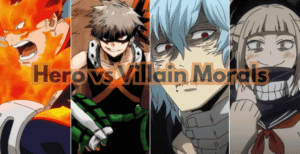
Villains challenge the status quo. They force society to confront uncomfortable truths. Characters like Shigaraki demand freedom from systems he believes oppress people. Twice longs for identity and acceptance. Toga wants to express “love” in a world that doesn’t accept her.
Key Moral Lessons
- People crave freedom, even if they pursue it destructively.
- Villains reveal the consequences of emotional neglect.
- Understanding them helps prevent future tragedies.
MHA encourages empathy — not sympathy — toward villains, showing that their actions have roots worth examining.
True Heroism Comes From Empathy, Not Power
Deku vs Gentle Criminal, Ochako vs Toga, and Todoroki’s family arc all highlight one major lesson:
The strongest heroes are those who understand others, not just defeat them.
Key Moral Lessons
- Empathy can defuse battles before they begin.
- Emotional intelligence is just as heroic as physical strength.
- Understanding villains is the first step to changing society.
MHA proves that heroism starts with listening, kindness, and compassion.
Conclusion
The moral conflict between heroes and villains in My Hero Academia is deeper than simple good vs evil. Heroes represent hope, responsibility, and compassion — but they are flawed. Villains represent pain, trauma, and rebellion — but they were once victims. Together, their clash paints a layered picture of a society struggling to balance justice and humanity.